Keep a change connected to the agreed scope
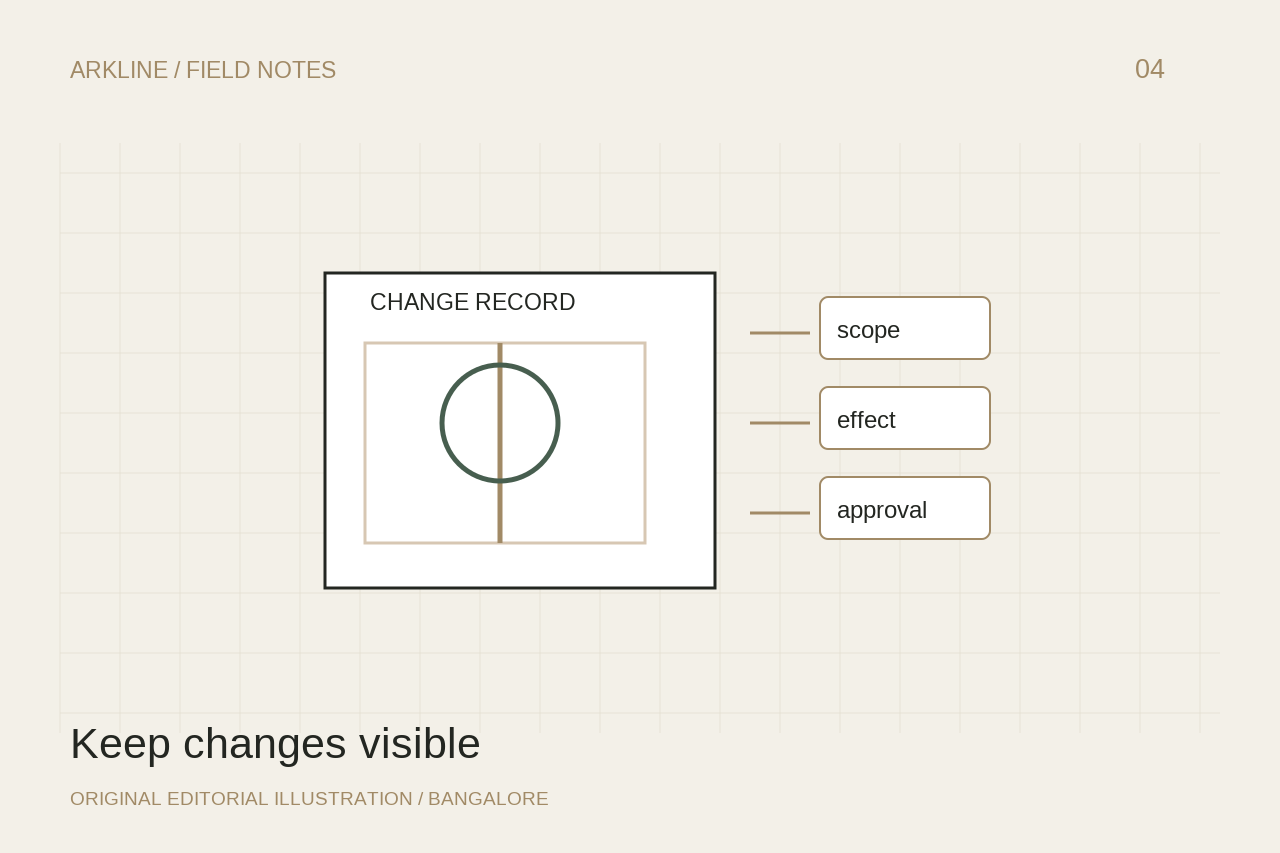
Construction decisions often arrive through conversation, site visits, calls and messages. A written change record gathers the decision in one place and makes it possible to see whether the site is using the current instruction. It also helps distinguish a new preference from correction of an error, a design coordination issue or a condition discovered during work.
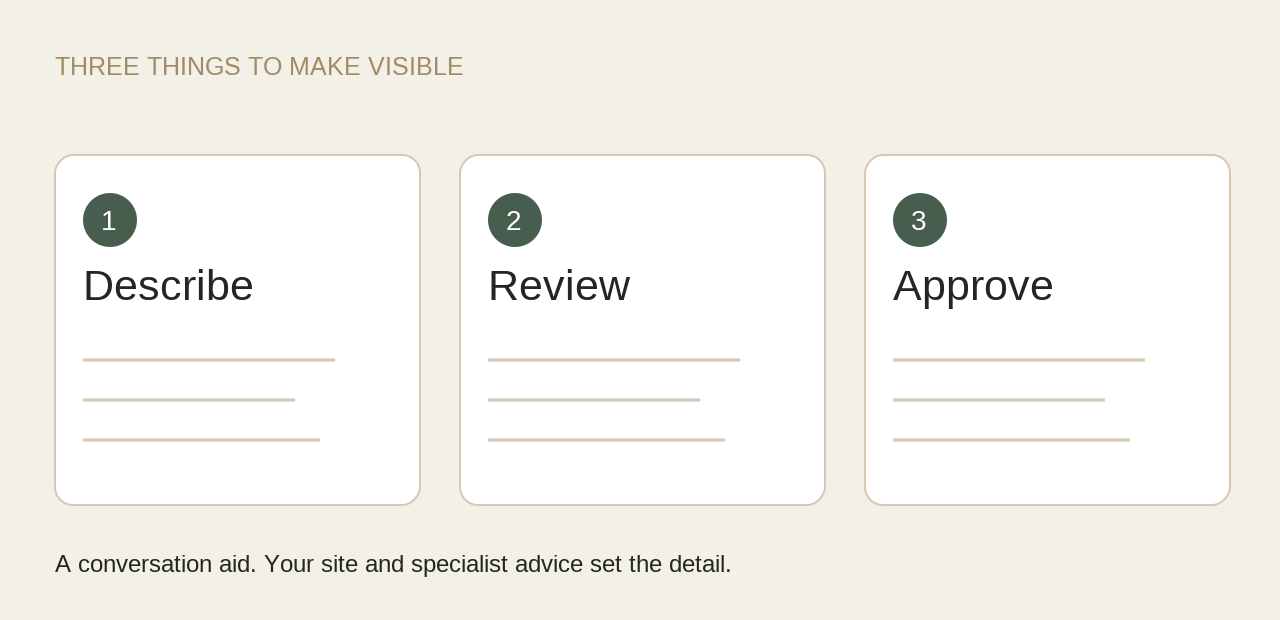
Start by identifying the original agreement and current drawing revision. Describe the change in plain language: what is being added, removed, moved or substituted, and what prompted it. Attach a marked-up sketch or revised sheet where useful. Avoid vague notes such as “adjust kitchen” without a location and specific outcome.
The CPWD Works Manual is an official guide for public works contract administration and discusses deviation, extra items and measurement in that context. It is not a universal rulebook for private Bengaluru homeowner contracts. The method here is editorial organization guidance; the signed private contract determines the parties’ process and rights.
Describe the work and its consequences
A useful change note records the affected room or item, current condition, requested outcome and revised drawing or specification reference. List work removed as well as work added. State whether materials, finishes, quantities, testing, disposal or coordination change. If the request is not yet fully designed, mark the record as a proposal awaiting technical detail rather than authorization to build.
Ask for the price basis, any allowance or measurement assumption, taxes as handled under the agreement, and any credit for deleted work. Also ask how the change affects sequencing, completion dates, access or other trades. If a cost or timing effect cannot yet be confirmed, record who will provide it and by when. Avoid treating an unpriced instruction as settled.
| Record field | Useful description | Example prompt |
|---|---|---|
| Request | What changes and why | Which room, item or outcome? |
| Document | Drawing and revision affected | Is a revised sheet required? |
| Scope | Additions, deletions and assumptions | What work is included or credited? |
| Commercial | Price basis, taxes, allowance | Is this fixed, measured or provisional? |
| Schedule | Sequence, dependencies and effect | Which following activity moves? |
| Approval | Authorized decision and date | Who may approve under the agreement? |
Check the right people have reviewed it
Some changes affect more than appearance. Moving an opening, removing a wall, changing a wet area, rerouting services or changing glazing may have structural, waterproofing, fire, access, energy or approval implications. Ask the responsible qualified professional to review the technical effect. Do not rely on a contractor or homeowner guess when the change may affect safety or compliance.
Confirm the commercial process from the signed agreement: who can request a change, who can approve it, what pricing basis applies, and whether written approval is required before the work. Record the answer with the change note. The article does not set contract terms or imply that every change requires the same treatment.
If a change may require an authority submission or revised approval, ask the architect or other responsible professional to confirm the current process for the property. BBMP’s public plan approval information refers to relevant bye-laws and zoning regulations, but the applicable authority and route depend on the site and project.
Distribute the decision and close the loop
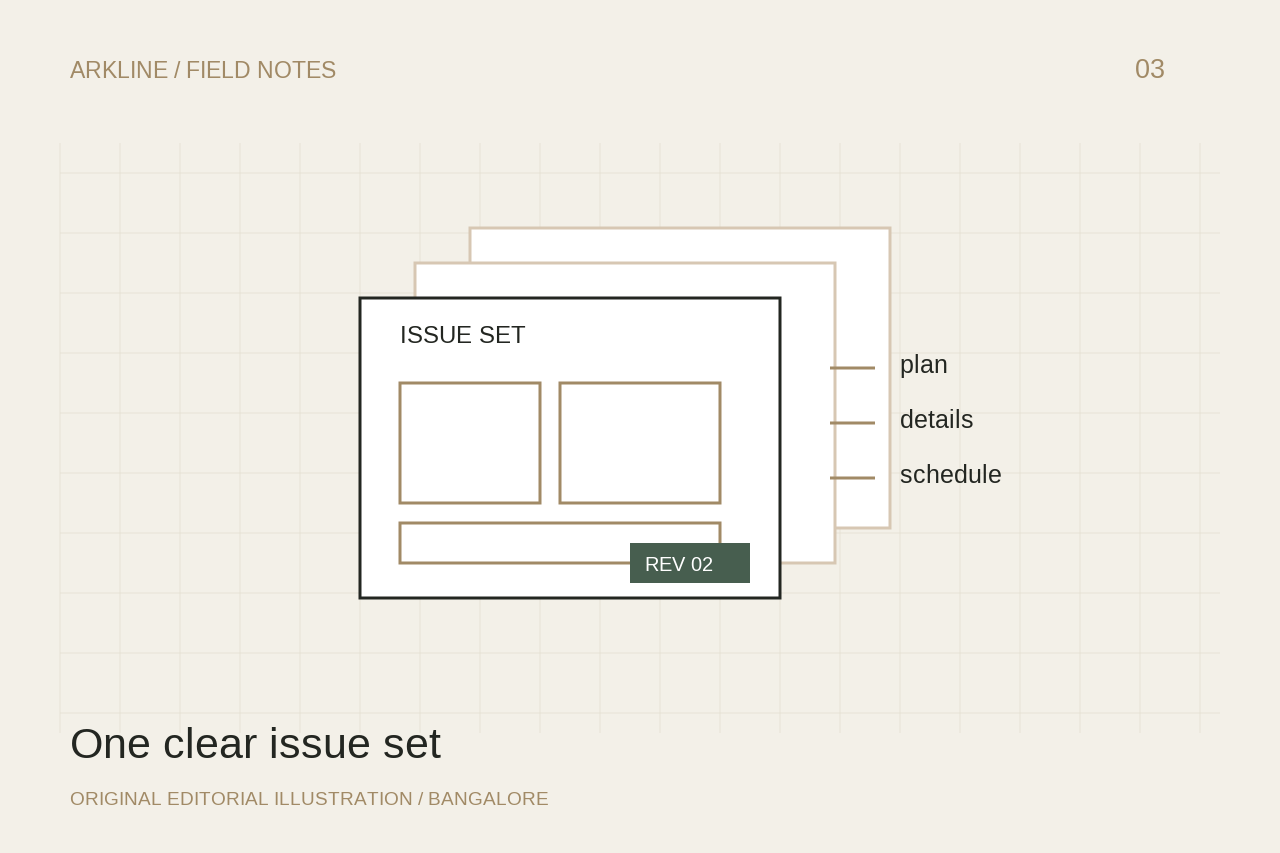
Once the authorized parties agree, date the approval and distribute the final record to the owner, site lead, designer and affected trades. Replace superseded drawings in the active site set and mark the old revision withdrawn. Keep one log with status: raised, awaiting information, priced, approved, rejected or completed. Record completion evidence or a site inspection where the project process calls for it.
Worked example: a homeowner asks to relocate a wash basin after plumbing rough-in. The note identifies the bathroom drawing revision, requests a marked-up layout, asks the plumber and designer to confirm service implications, and requests a written price and sequence effect. The owner approves only after receiving the revised information, and the site team receives the same updated sheet. The example shows the record flow, not a technical plumbing solution.
Use the change register worksheet below to keep decisions readable. For disputed interpretation, major scope changes or contract consequences, consult the appropriate construction professional or legal adviser.
Take this to your next meeting
Your site checklist
- Identify the original scope and current drawing revision.
- Describe the reason and exact work added, removed or substituted.
- Attach a marked-up or revised drawing when needed.
- Request a written price basis, allowance and tax treatment under the agreement.
- Record sequence, dependency and schedule effects.
- Obtain technical review when safety, structure, services or approvals may be affected.
- Record authorized approval before changed work proceeds and distribute the current issue.
Common questions
Can a WhatsApp message approve a construction change?
Follow the signed agreement’s notice and approval process. Even if messages are used for communication, gather the decision, scope, price and schedule effect into the project record and confirm who is authorized to approve.
What if the cost cannot be known yet?
Record what information is missing, the pricing method or allowance proposed, who will provide a firm basis, and whether the work is on hold pending approval. Do not disguise an unknown amount as a confirmed price.
Does every design change need authority approval?
That depends on the change, property and applicable requirements. Ask the responsible architect or qualified professional to determine whether a revised submission or other approval is needed for the actual project.
Reading notes
Sources & further reading
Checked on the dates below. Official requirements and documents can change; confirm the version that applies to your site.
- CPWD Works Manual 2022, Chapter 5: Contract Management Accessed 10 November 2026
- BIS: National Building Code of India 2016 overview Accessed 10 November 2026
- Bengaluru Building Plan Approval System Accessed 10 November 2026