Start with an asset list and service history
Make a simple inventory of items that need care: pumps and tanks, plumbing fixtures, electrical systems, backup power, HVAC, appliances, doors and windows, roof assemblies, drains, fire-safety equipment, timber and solar equipment. Record brand, model, installation date if known, warranty, manual location, service contact and access restrictions. Do not guess missing specifications; mark them unknown and ask the builder or service provider.
Use manufacturer instructions and qualified professional advice to set actual service intervals. A generic online calendar cannot know the installation, product, water conditions, usage or warranty terms in your home. Record the source of each reminder, such as a product manual or service agreement, so you can revise it if guidance changes or equipment is replaced.
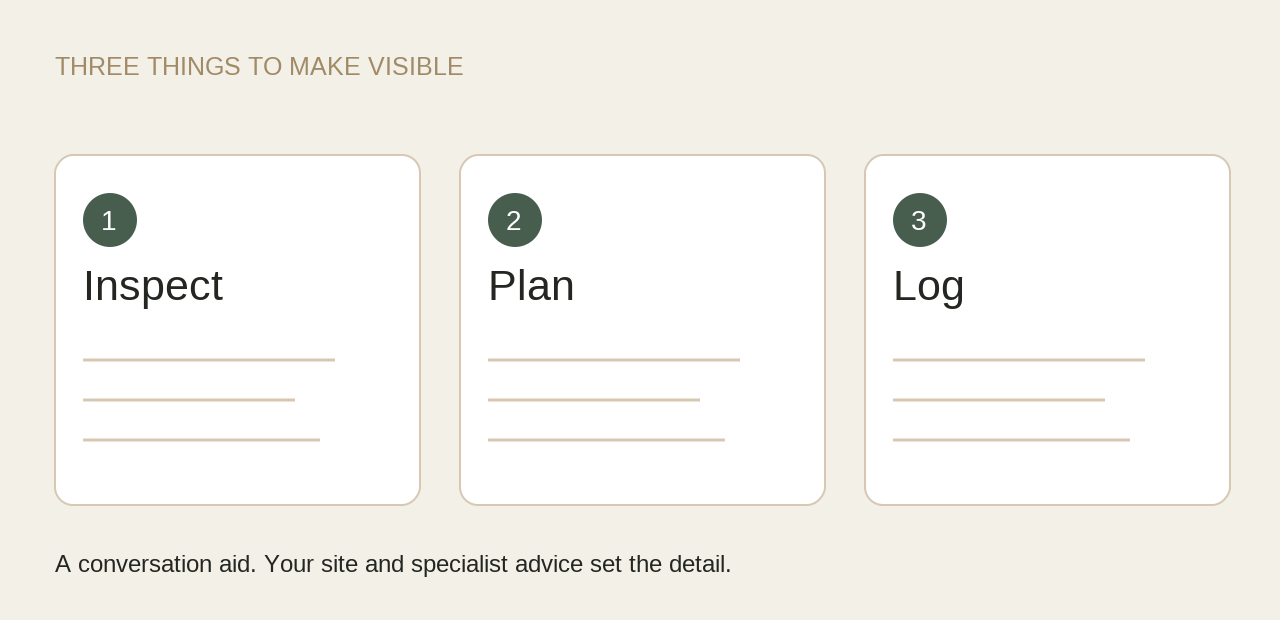
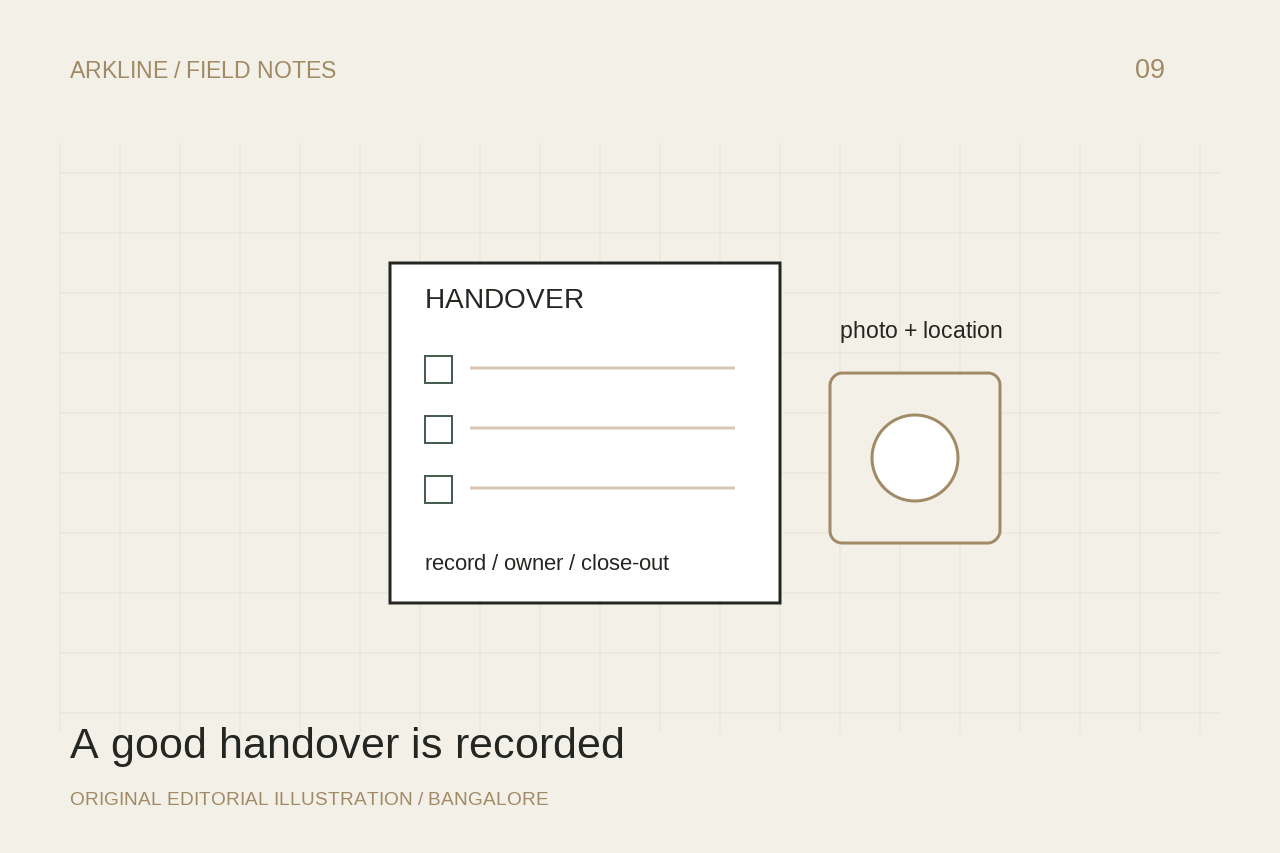
Keep records in a format the household will use: a printed log near the home file or a shared digital calendar. For each check, note the date, person, finding, photo if useful, action owner and next review. This makes a recurring stain or equipment fault easier to explain than relying on memory.
Store warranties and receipts by asset, and note how to contact the installer or service provider. If a product is replaced, remove obsolete reminders and attach the new manual. A current record helps a technician distinguish a new fault from an old repair and makes warranty conversations clearer.
Use seasons as prompts, not rigid service rules
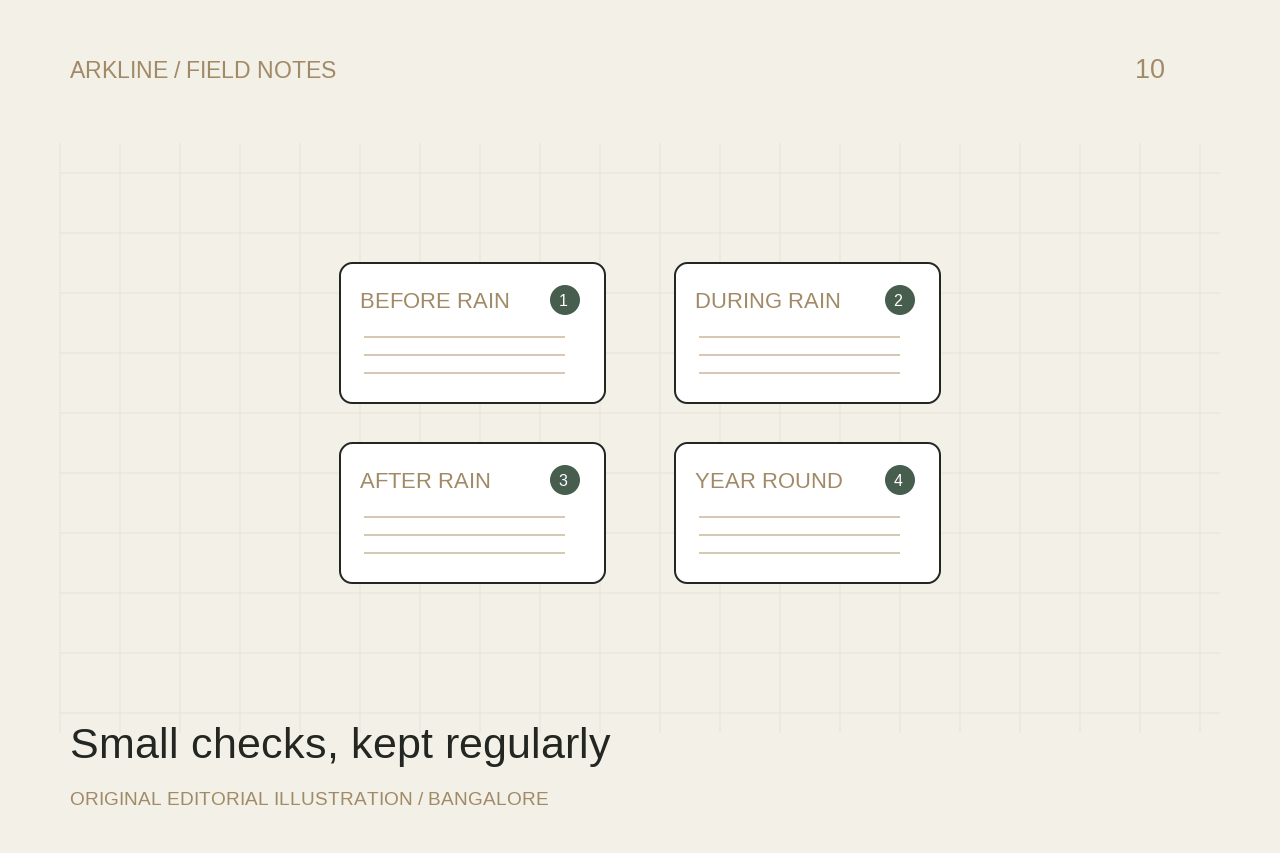
Before the wetter part of the year, schedule a safe ground-level look at accessible drainage points, visible wall or ceiling stains, window seals and signs of water entry. CPWD’s maintenance manual includes attention to drainage and leakage in its public-building maintenance context. A homeowner can use that as a prompt to arrange inspection, but should not climb onto a roof, enter a tank or clear a hazardous drain personally.
After heavy rain or unusual weather, record new damp patches, ceiling changes, odours or pooling visible from a safe area. Photograph location and date and contact the builder or qualified professional if the condition persists or appears active. Do not assume the source based on the nearest pipe or apply a coating that may hide evidence.
In drier months, review accessible exterior finishes, exposed sealants, doors and windows, timber for visible pest signs and equipment that has been idle. Ahead of a planned trip or long vacancy, arrange a responsible person to check the home and follow manuals for shutdown or restart. Exact timing depends on the asset and manufacturer guidance.
Keep the calendar useful by separating a seasonal observation from a service visit. A reminder to note visible changes is not the same as an instruction to repair or certify a system. If access, safety or diagnosis is uncertain, assign the task to a qualified provider and record the appointment rather than attempting it yourself.
Know which checks belong to professionals
Homeowner checks should remain visual and safe: look for a new stain, unusual sound, visible loose part or missing label from an accessible position. Do not open electrical panels, touch exposed wiring, climb ladders or roofs, enter confined tanks, handle sewage, dismantle pressurized components or test beyond normal user controls. If an area is wet near electrical equipment, keep away and contact a qualified electrician or emergency service as appropriate.
Arrange qualified services for electrical inspections and repairs, plumbing or pump faults, waterproofing diagnosis, roof access, pest treatment, HVAC maintenance, fire-safety equipment and structural concerns. Ask the provider what was inspected, limits of the visit, parts replaced, readings or test records where relevant, warranty impact and follow-up. Keep the report with the asset record.
Do not infer water potability from clarity, smell or taste. If a drinking-water concern arises, use relevant local supply authority information and arrange suitable laboratory testing through an appropriate service. A maintenance log can track sample date, laboratory and response without interpreting a result beyond qualified guidance.
| Observation | Safe homeowner action | Professional follow-up |
|---|---|---|
| New damp patch | Photograph, date and note nearby activity | Qualified diagnosis of source and repair |
| Damaged visible cable | Keep clear and prevent access if safe | Qualified electrical assessment |
| Slow or unusual drainage | Note fixture and timing | Plumber checks blockage and condition |
| Loose exterior element | Keep people away from the area | Qualified access and secure repair |
Turn the calendar into a closed loop
Give each planned check a named person and practical time window. Separate “look for a visible change” from “service equipment” and “arrange a specialist.” Link each reminder to the manual, service agreement or prior report that supports it. Add an escalation contact for urgent faults and ensure household members know where manuals and professional instructions are stored; a qualified person should explain user-accessible controls.
Worked example: a family notices a recurring ceiling stain after rain. The log captures the room, date, photo, whether the mark changed and any nearby fixture activity. The homeowner avoids roof access and asks the builder or qualified building professional to investigate. The report records suspected source, approved repair, responsible person and recheck date. If the stain returns, the history helps the next visit instead of prompting repeated cosmetic repainting.
Review the list twice a year or when equipment, occupancy or warranties change. Remove reminders for replaced assets, attach new manuals and update service contacts. CPWD schedules and public-sector contract terms are not automatically private-home obligations; use them only as reference examples. This editorial calendar is not a code or legal schedule and cannot replace manufacturer instructions, local rules or expert service.
Keep urgent contacts visible to household members and tenants. Note where the building manager or service provider can be reached, and which systems require specialist access. A simple “who to call” entry prevents a reminder list from becoming a set of vague tasks with no owner.
Take this to your next meeting
Your site checklist
- List home systems, models, manuals and warranty contacts.
- Set intervals from product instructions and service agreements.
- Use safe, accessible visual observations only.
- Record date, location, evidence, owner and next action.
- Use qualified providers for technical, high-access or hazardous tasks.
- Review reminders after repairs, replacements or occupancy changes.
Common questions
How often should I inspect my Bengaluru home?
Use manufacturer instructions and professional recommendations for each asset. Add seasonal visual reminders suited to the home, but do not treat one interval as suitable for every property.
Can I inspect the terrace or clean roof drains myself?
Do not climb or enter unsafe areas. Arrange an appropriately equipped professional to inspect high or hazardous locations and follow building access rules.
Does clear water mean it is safe to drink?
No. Appearance, smell and taste do not establish potability. Use reliable supply information and appropriate testing through a qualified laboratory or authority if you have a concern.
Reading notes
Sources & further reading
Checked on the dates below. Official requirements and documents can change; confirm the version that applies to your site.
- CPWD Maintenance Manual 2019: Preventive Maintenance Accessed 10 November 2026
- BIS: National Building Code of India overview, including asset management Accessed 10 November 2026
- CEA Safety and Electric Supply Regulations, 2023: Gazette notification (government-hosted copy) Accessed 10 November 2026