Start with room use, not tile names
Make one line for each area: entrance, living room, bedroom, kitchen, bathroom, utility, stair, terrace or balcony. Note footwear, bare feet, children, pets, furniture movement, cooking spills, tracked-in grit, sunlight, cleaning equipment and whether rain can reach the surface. A floor that looks calm in a showroom may show grit, hair, water marks or scratches differently at home.
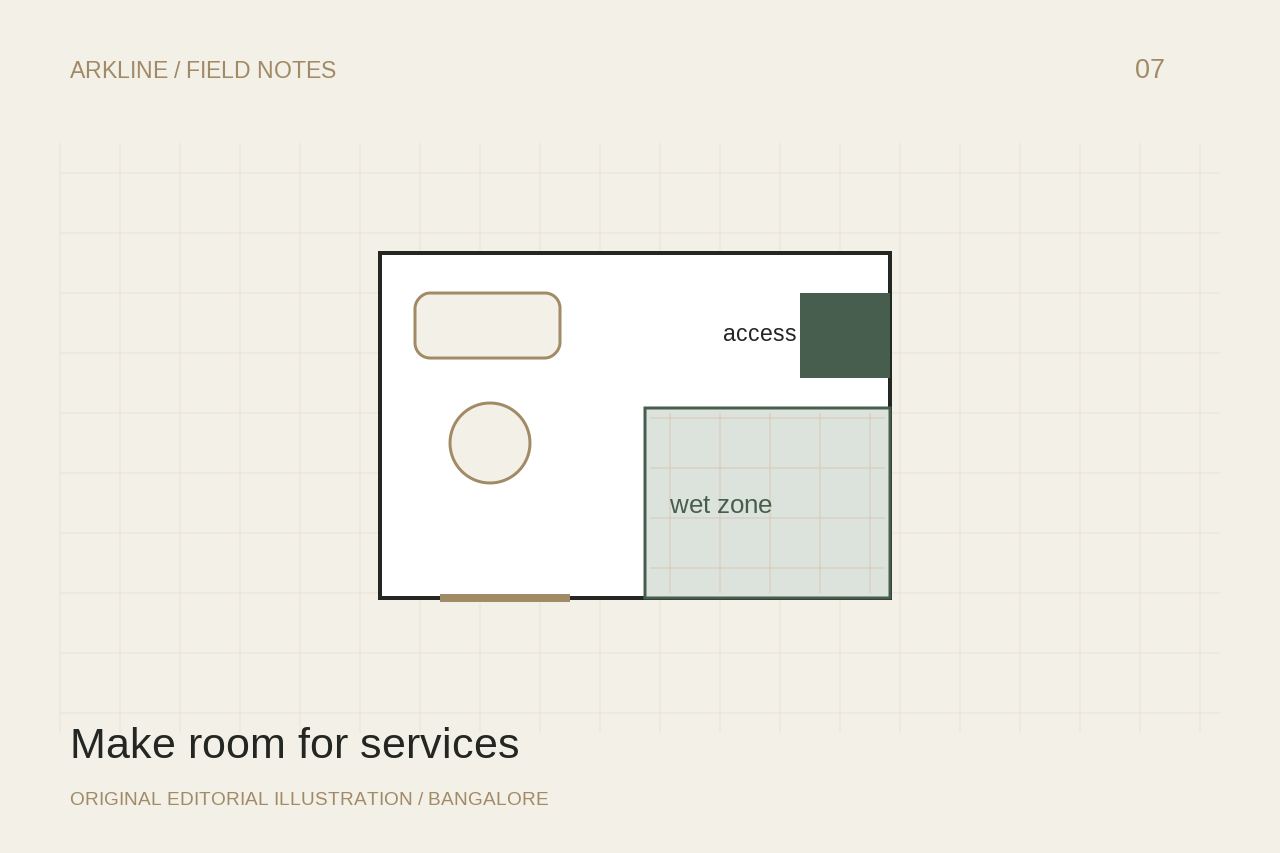
Record which rooms need quiet underfoot, easy spot cleaning, a repairable finish or a visually continuous threshold. Keep wet rooms and exterior areas separate from dry-room decisions. This is an editorial planning brief, not a slip-risk assessment or installation specification.
Compare surfaces against actual conditions
Compare the complete floor assembly: tile or stone, adhesive or mortar, grout, substrate, movement joints, skirting, edge trims and drainage. The same face finish can behave differently when installed, contaminated or poorly maintained. Ask for the proposed product's technical data sheet and approved uses rather than relying on a showroom description.
| Room condition | Questions for the proposed floor |
|---|---|
| Dry living and bedroom areas | Will the surface show tracked grit, chair movement, dust and daylight glare? Can a damaged unit be replaced without making the room look patched? |
| Kitchen and utility | How are oil, food, detergent and frequent mopping handled? What care products are allowed, and what happens at appliance edges and service access? |
| Bathrooms and wet areas | Is the product documented for floor and wet-area use? How do grout joints, falls, drainage, cleaning residue and bare-foot use affect the installed surface? |
| Balcony or terrace | How will rain, dust, heat, drainage, edge exposure and movement be addressed? Who can access it safely for cleaning or repair? |
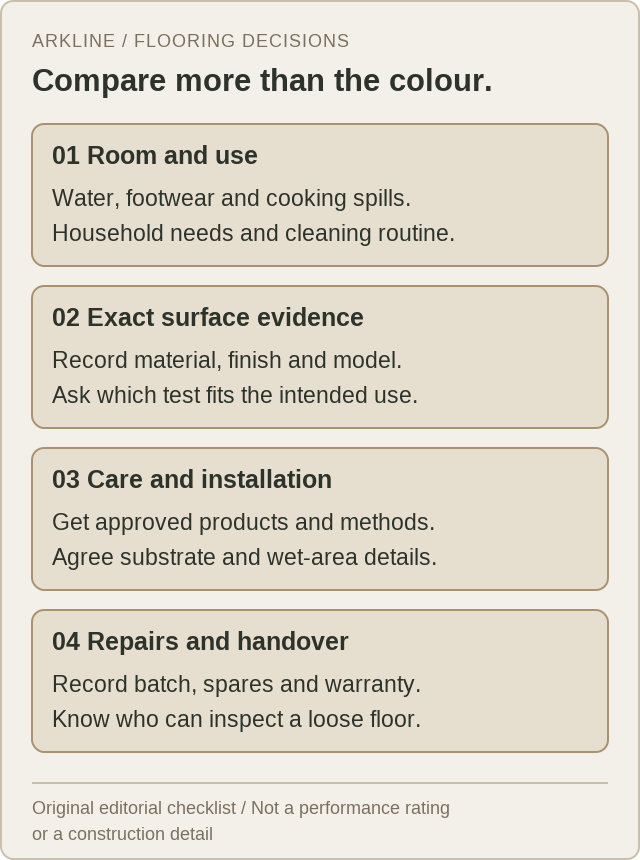
Do not equate glossy, matte, textured or “anti-skid” wording with one universal result. The TCNA friction FAQ explains that measured dynamic coefficient of friction (DCOF) is not the same as slip resistance and cannot predict whether someone will slip. Use conditions, contamination, footwear, slope and maintenance also matter. Ask the responsible design and installation team to assess the actual application. This North American technical background is not a local approval or an Indian compliance rule.
Test samples and write down the care routine
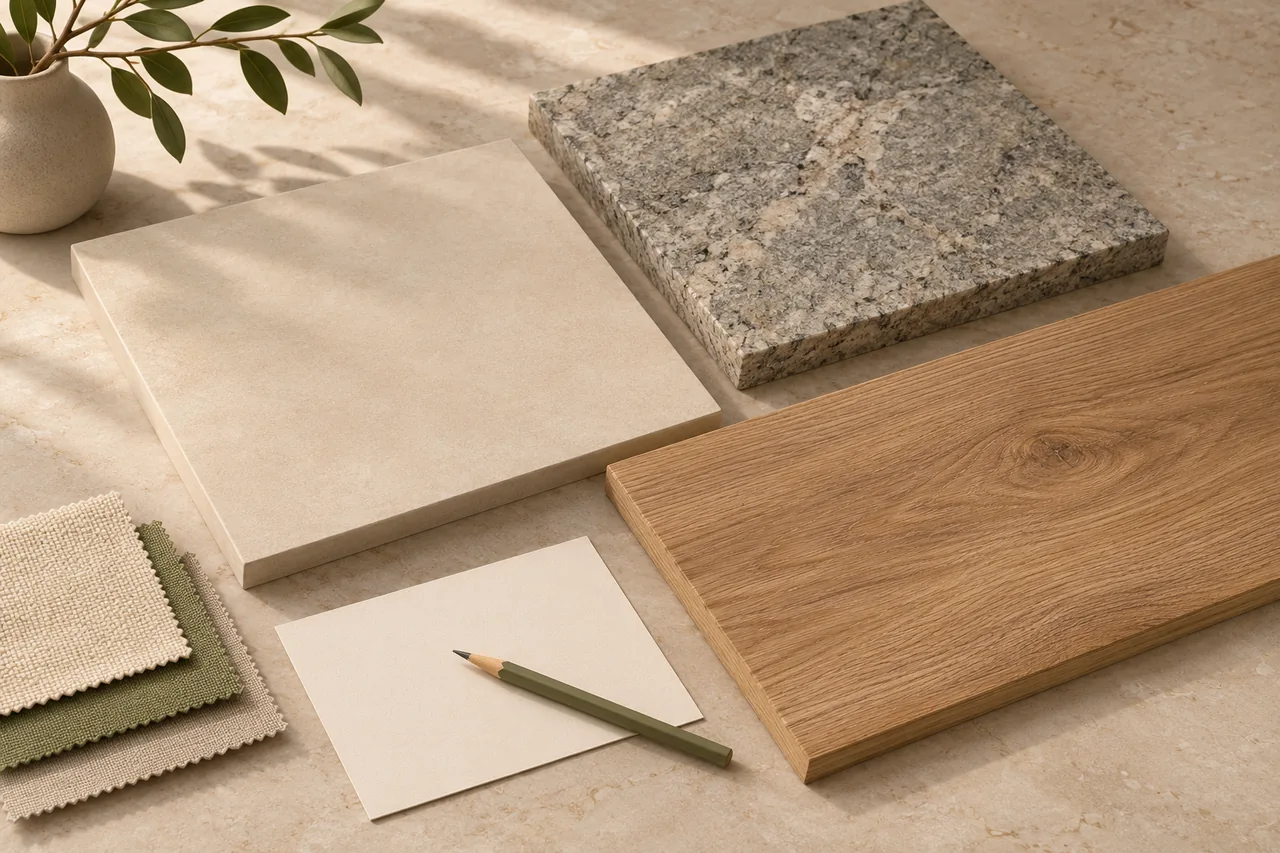
Place full-size samples where the floor will be used. View them in morning and evening light, beside the wall colour, skirting and sanitaryware, and with the cleaning tools you actually expect to use. If a wet area matters, ask the team how the proposed sample and installation will be reviewed under the intended conditions. A small showroom chip cannot show every joint, transition or repair detail.
Request the manufacturer’s cleaning instructions, approved products, stain limitations, sealing guidance where relevant, warranty conditions and batch or shade information. Natural Stone Institute guidance explains that stone composition affects suitable cleaning products; acidic cleaners can damage some calcareous stones, and grit can scratch surfaces. Use the product’s own instructions and qualified advice for the selected stone.
Keep spare units from the same batch if the supplier and installer advise it. Photograph the approved sample, record product code and lot, and store the data sheet with the room schedule. Do not promise that a sealant makes a surface stain-proof or that any finish removes all maintenance.
Coordinate the floor before fixing the order
Before ordering, ask for a room-by-room schedule showing product, size, direction, grout, skirting, thresholds, transitions and areas that require falls or movement joints. Confirm who checks substrate readiness, levels, moisture, expansion and set-out. Product suitability and installation quality are separate decisions.
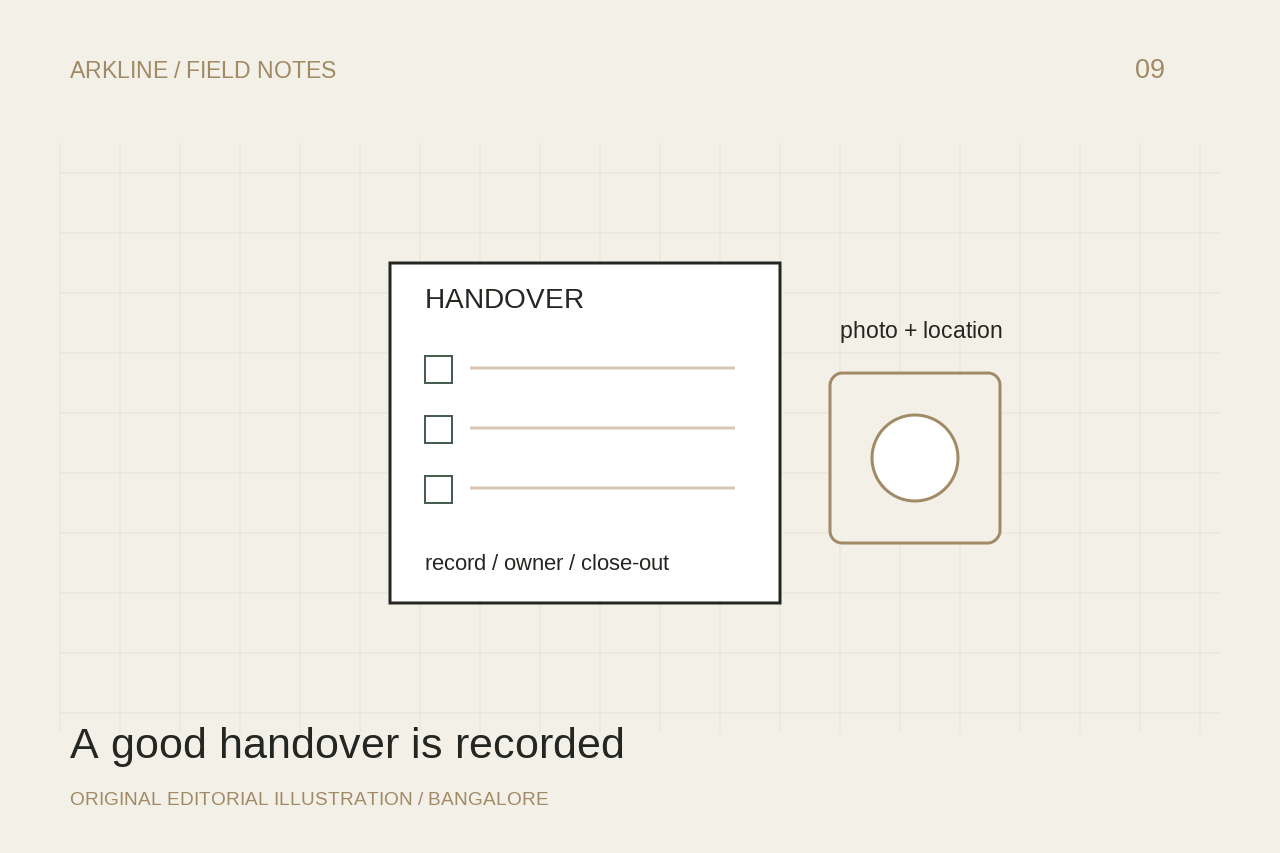
Ask for a mock-up or agreed sample board where layout, grout and edge details are hard to judge. At handover, keep the approved sample, technical sheet, care instructions, spare stock and installation photos taken before details were covered. A written record helps if one tile is discontinued or a room needs a future repair.
Take this to your next meeting
Your site checklist
- List room use, moisture, grit, footwear, cleaning and repair priorities.
- Separate dry rooms, wet areas, balconies and terraces in the schedule.
- Request product data, approved uses, care instructions, warranty limits and batch information.
- Test full-size samples in actual daylight and beside proposed finishes.
- Ask qualified professionals to review wet use, drainage, substrate, joints and transitions.
- File the approved sample, product code, spare stock and installation record for future repairs.
Common questions
Is matte tile always safer than glossy tile?
No single appearance label predicts in-service traction. Ask for evidence relevant to the actual room, wetness, slope, cleaning routine and installation, then have the responsible team assess the proposed assembly.
Can I use one floor tile throughout my home?
You can compare a continuous look, but room conditions still differ. Check wet-area use, exterior exposure, cleaning, thresholds, drainage and repair evidence separately before extending one product everywhere.
How should I choose natural stone flooring?
Identify the stone and ask for its care, sealing, stain and repair guidance. Stone composition affects cleaner choice; use manufacturer or qualified stone-care advice rather than assuming granite, marble or another name has one uniform maintenance need.
Reading notes
Sources & further reading
Checked on the dates below. Official requirements and documents can change; confirm the version that applies to your site.
- Natural Stone Institute: Care & Cleaning of Natural Stone Accessed 17 November 2026
- Tile Council of North America: Dynamic Coefficient of Friction FAQ Accessed 17 November 2026