

Follow the water from roof to ground
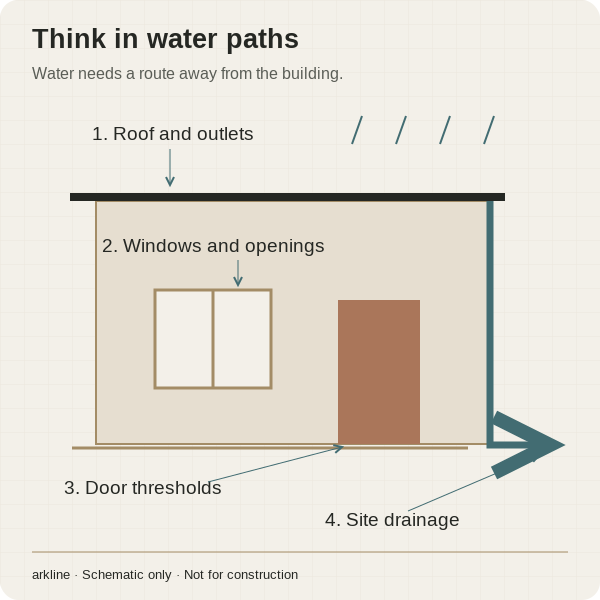
Start outside, where safe. Look at roof edges, terrace outlets, gutters and downpipes: are they visible, clear and directing water away from vulnerable wall bases? Check whether leaves, construction debris or a new service installation obstructs a route. At ground level, note whether paved areas slope toward the house, whether drains overflow, and whether runoff pools near entrances or neighbouring boundaries. A balcony, parapet corner or sunshade can concentrate water at a junction that is easy to miss from indoors.
CPWD's maintenance manual recommends attention before monsoon to roofs, rainwater pipe inlets and outlets, sunshades, plinth protection and drains; it also lists leaks, seepage and roof-waterproofing damage as inspection concerns. Use that as a maintenance prompt, not a DIY repair specification. CPWD Maintenance Manual 2019
Check the places where parts meet
Windows, doors, balconies and service penetrations deserve attention because water can enter where materials and planes meet. From indoors, note stains at window corners, bubbled paint, musty odour, swelling timber, lifted flooring or ceiling marks. From a safe exterior viewpoint, observe damaged sealant, loose fittings, cracked finishes and signs that water is running behind a frame. A high threshold can reduce splash entry but may create an access barrier; any change should balance drainage, accessibility and the existing floor build-up.
Photograph symptoms with a date and a wider view that shows location, then take another close-up after rain. Record wind direction if known, duration of rainfall, whether the leak is active, and any nearby plumbing use. This can help a professional distinguish a roof issue from a window junction, plumbing leak, condensation or water travelling from another level. Avoid covering wet patches with fresh paint before the source is understood.
Repair the cause, not the stain
Persistent damp can travel, so the visible mark may not sit directly below the entry point. A contractor or building professional may need to inspect the roof surface, parapet junctions, drainage path, external wall, window interface and concealed services. Ask for the observed cause, proposed repair area, preparation and curing approach, expected limitations, and how the result will be checked after rainfall. If access is unsafe or water is near electrical equipment, keep clear and arrange qualified help promptly.
Be cautious about promises that one coating will solve every leak. Waterproofing depends on substrate condition, movement, detailing, drainage and workmanship. Repairs that affect roof slabs, parapets, façade anchorage or structural elements need a qualified professional's assessment. Do not drill, cut, chase or load a building element based on an online checklist.
After repair, keep the original photographs and add dated observations. Check the same locations during later rains and note whether symptoms recur. This simple record is more useful than relying on memory when a leak is intermittent or seasonal.
A short seasonal review
| Area | Observe | Escalate when |
|---|---|---|
| Roof and terrace | Blocked outlets, ponding, loose services or fresh cracks. | Water persists, a junction is damaged, or safe access is uncertain. |
| Windows and doors | Stains, failed seals, swollen frames or water after wind-driven rain. | Leak repeats or the source is concealed. |
| Thresholds and ground | Water crossing inward, pooling near the building or overflowing drains. | Drainage changes could affect neighbours, foundations or public drains. |
In apartments, report common roof, façade or drain issues to the association or facility team early; an individual owner may not control the relevant surface. For independent homes, coordinate roof work and site drainage with professionals familiar with the property. A shared log also helps an association spot recurring problems across several homes.
Take this to your next meeting
Your site checklist
- Photograph roof, window, threshold and ground-level drainage concerns before the rains.
- Clear accessible debris only when the location can be reached safely.
- Record each damp patch with date, weather and a location overview.
- Ask for the leak source and verification plan, not just a product name.
- Use qualified professionals for waterproofing diagnosis or work that touches building elements.
Common questions
Should I repaint a damp wall before the monsoon?
First establish why it is damp and let the area be assessed. Repainting can hide evidence without stopping the water source.
Can I seal a window leak with new silicone?
A failed seal may be one cause, but water can enter elsewhere and travel. Have recurring leaks diagnosed before applying a patch.
When should I inspect for leaks?
Review safely accessible roof and drainage areas before the rainy period, then record symptoms during and after rainfall. CPWD's manual highlights pre-monsoon upkeep.
Reading notes
Sources & further reading
Checked on the dates below. Official requirements and documents can change; confirm the version that applies to your site.
- CPWD Maintenance Manual 2019 Accessed 10 November 2026
- CPWD Maintenance Manual: monsoon maintenance chapter Accessed 10 November 2026